IONIC_PRESERVATION
pickling
The Acidic Stasis
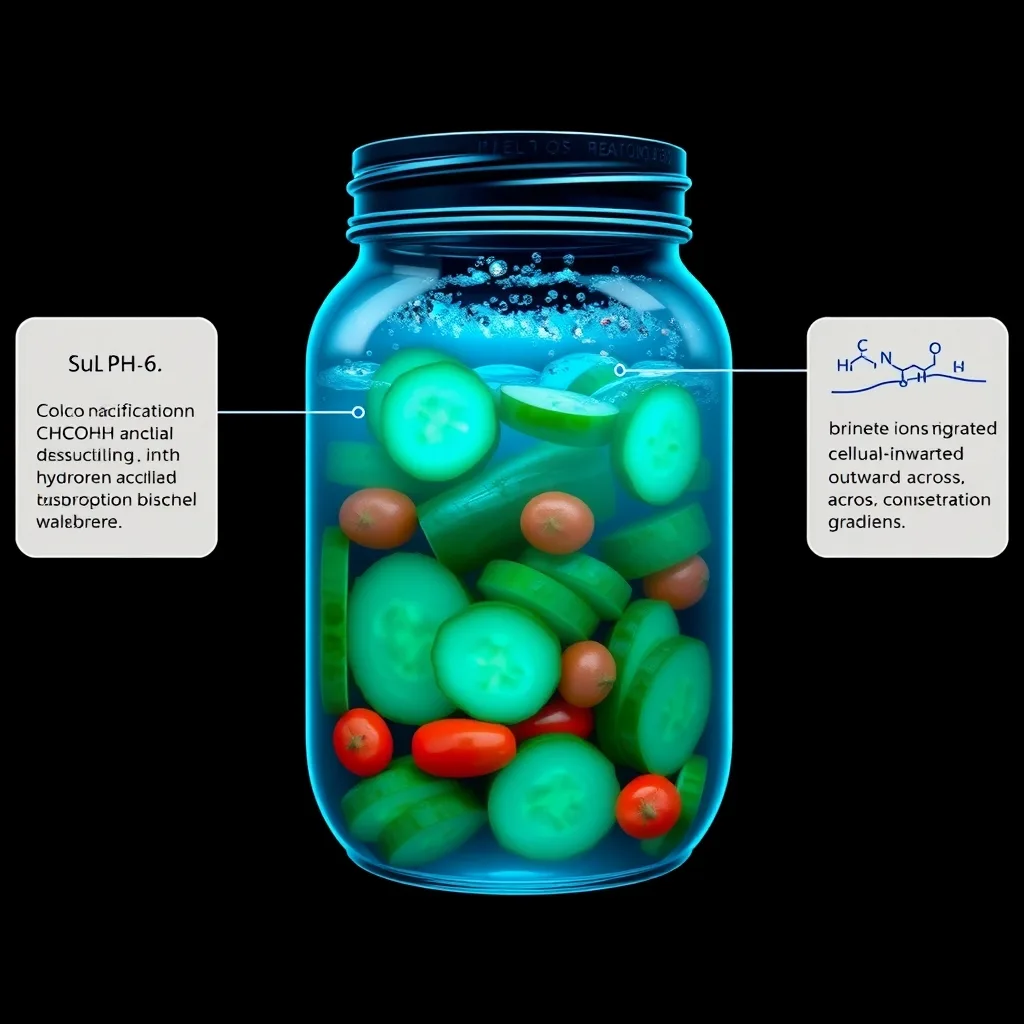
Suspension of decay through ionic immersion. The substrate is sealed within an acid or brine field, where osmotic exchange and pH collapse hold organic matter in indefinite stasis.
KINETIC_PROFILE
Zero thermal voltage; the operative current is ionic. Hydrogen ions and dissolved salts migrate along concentration gradients into the cellular matrix, displacing water and arresting microbial metabolism.
J = −D (dC/dx)Fick's first law — brine ions flux along the concentration gradient into the substrate.
ELEMENTAL_SIGNATURE
This transmutation leans water.
ASTROLOGICAL_RULERSHIP
MOLECULAR_INTERACTION
Acidification
Acetic or lactic acid floods the medium, collapsing pH below the survival threshold of spoilage organisms. Cellular enzymes denature in the acid field, locking texture and color in place.
CH3COOH ⇌ CH3COO⁻ + H⁺Osmotic Exchange
The hypertonic brine draws cellular water outward while salt and aromatic ions migrate inward. Turgor collapses then re-equilibrates, yielding the signature dense, snapping crunch.
THERMAL_ENVELOPE
Acid/salt diffusion and microbial suppression are strongest in controlled cool storage.
PRAXIS
BENEFITS
- preservation
- flavor enhancement
- texture development
- color preservation
- reduced food waste
- shelf stability
- enhanced umami flavors
- probiotic development (in fermented pickles)
SUITABLE_SUBSTRATES
INSTRUMENTS
- Glass jars with lids
- Non-reactive pot (for vinegar)
- Canning equipment (optional)
- Knife and cutting board
- Measuring cups/spoons
- pH test strips (optional)
- Mandoline or slicer
- Fermentation weights (for fermented pickles)
- Sterilization equipment
- Spice grinder
COMMON_FAILURES
- using reactive metal containers
- improper sterilization
- incorrect vinegar concentration
- using iodized salt
- incorrect salt concentration for fermented pickles
- inconsistent vegetable size
- improper sealing
- overprocessing (loss of crispness)
REGIONAL_VARIANTS
- EASTERN EUROPEAN sauerkraut, pickled beets, dill pickles
- ASIAN kimchi, tsukemono, achar, do chua
- MIDDLE EASTERN torshi, pickled turnips, olives, pickled lemons
- INDIAN achaar, pickled lime, amla pickle, nimbu ka achaar
- AMERICAN dill pickles, bread & butter pickles, pickled okra, watermelon rind
OPTIMAL_TEMPERATURES
SAFETY_SIGILS
- Pathogen inhibition through acidity
- Long-term preservation without refrigeration
- pH below 4.6 prevents botulism growth
- Salt concentration inhibits harmful bacteria
- Fermented pickles produce antimicrobial compounds
- Proper canning prevents spoilage
ARCHIVES
HISTORICAL_RECORD
Pickling has been practiced for at least 4,000 years, originating as a necessity for food preservation before refrigeration. Ancient Mesopotamians pickled foods in brineas documented in cuneiform tablets from 2400 BCE. The word 'pickle' derives from the Dutch 'pekel' or German 'pökel,' referring to salt or brine. In ancient times, pickling was essential for long sea voyages and military campaigns. Cleopatra attributed her beauty to a diet of pickles. Throughout history, sailors consumed pickled foods to prevent scurvy. During the 17th and 18th centuries, pickled vegetables were vital for long ocean voyages. The Industrial Revolution standardized pickling processes, with companies like Heinz mass-producing pickled products by the late 19th century. In the 20th century, refrigeration reduced dependency on pickling for preservation, but cultural traditions and flavors have kept the method relevant worldwide.
SCIENTIFIC_PRINCIPLES
- Acid preservation lowers pH, inhibiting microbial growth
- Salt in fermented pickles creates selective environment for beneficial bacteria
- Osmotic pressure draws water from vegetables, aiding preservation
- Lactic acid bacteria convert sugars to acids in fermented pickles
- Acetic acid from vinegar penetrates cell membranes for preservation
- Antioxidants in spices help preserve color and nutrients
- Heat processing in canning destroys enzymes that cause spoilage
- Vacuum sealing prevents oxidation and contamination