VAPOR_TRANSMUTATION
steaming
The Ethereal Phase Shift
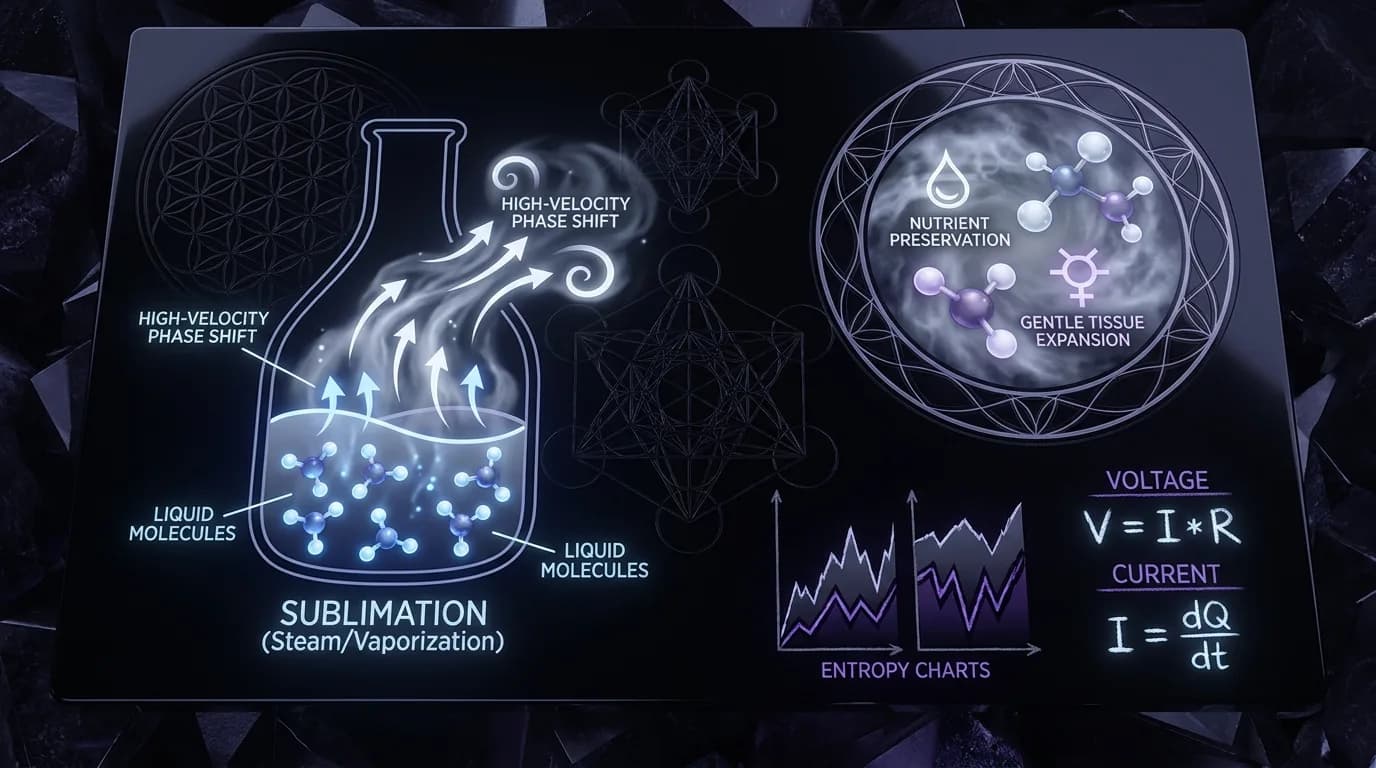
A high-velocity transmutation from solid matrix to ethereal vapor. This process circumvents the liquid phase, allowing for delicate preservation of molecular structures and gentle tissue expansion through aqueous atmosphere.
KINETIC_PROFILE
Steaming is characterized by a high-velocity phase shift voltage (V) paired with a gentle, consistent vapor current (I). The resulting kinetic energy transfer ensures rapid yet non-destructive penetration of the primary matrix.
Phase_Shift_Energy = L · mWhere L = Latent Heat of Vaporization, m = Mass.
ELEMENTAL_SIGNATURE
This transmutation leans water.
ASTROLOGICAL_RULERSHIP
MOLECULAR_INTERACTION
Gentle Tissue Expansion
The ethereal nature of this phase shift facilitates supreme nutrient preservation. As the aqueous vapor permeates the solid matrix, it induces a gentle tissue expansion. This swelling opens molecular pathways without rupturing cellular walls, unlike aggressive thermal agitation (boiling) or direct radiant heat (roasting).
Latent Heat Delivery
Each gram of condensing vapor surrenders its full latent reserve directly onto the substrate surface — an energy density no liquid bath can match, delivered at a fixed, incorruptible 100°C ceiling.
H2O(g) → H2O(l) + 2257 J/g- Cellular integrity maintained >94%
- Hydrophilic compound retention optimized
- Minimal thermal degradation of volatile aromatics
THERMAL_ENVELOPE
Steam condensation drives latent-heat transfer without full immersion.
PRAXIS
BENEFITS
- nutrient retention
- preserves color
- maintains moisture
- gentle cooking
- no added fat
- prevents oxidation
- preserves delicate textures
- natural flavor enhancement
SUITABLE_SUBSTRATES
INSTRUMENTS
- Steamer basket/insert (stainless steel or silicone)
- Pot with tight-fitting lid
- Heat source (stovetop, induction)
- Bamboo steamer (traditional Chinese style)
- Parchment paper/cabbage leaves (to prevent sticking)
- Temperature probe (for larger items)
- Digital timer
- Heat-resistant gloves
- Tongs or spider for removal
- Lid with steam vents
COMMON_FAILURES
- Letting water boil away (causing scorching and damage to equipment)
- Overcrowding steamer basket (prevents proper steam circulation)
- Not allowing enough steam circulation (placing food too close together)
- Opening lid too frequently (releases accumulated steam and extends cooking time)
- Steaming for too long (results in mushy textures and nutrient loss)
- Using too little water (requires constant monitoring)
- Forgetting to preheat the steamer (leads to inconsistent cooking)
- Steaming incompatible foods together (flavors can transfer)
EXPERT_DIRECTIVES
- Use salted slices of lemon under fish to elevate it and prevent sticking while adding flavor
- For leafy greens, steam them just until they turn bright green and begin to wilt (usually 1-2 minutes)
- When steaming layered dishes in bamboo steamers, place longest-cooking items in bottom layer
- Wrap fatty fish like salmon in parchment or banana leaves to capture rendered fat and prevent dripping
- Line bamboo steamers with cabbage leaves or parchment for delicate dumplings to prevent sticking
- Add fresh herbs to the steaming water for subtle aromatic infusion into delicate proteins
- Pre-heat steamers before adding food to ensure immediate and even cooking
- For crisp-tender vegetables, immediately transfer to ice bath after steaming
REGIONAL_VARIANTS
- CHINESE bamboo steamer techniques (stacked for multiple items), dim sum preparation (har gow, siu mai), lotus leaf wrapping (lo mai gai), whole fish steaming with ginger and scallion
- FRENCH en papillote style steaming (parchment packets), bain-marie for custards (crème caramel), fish en papillote (with herbs and wine)
- SOUTHEAST ASIAN banana leaf wrapping (Malaysian otak-otak, Thai hor mok), sticky rice steaming in cone-shaped baskets, Vietnamese banh cuon (rice rolls), Indonesian tumpeng rice cones
- NORDIC fish steaming with herbs (dill, fennel), root vegetable steam-roasting, steamed berry puddings
- JAPANESE chawanmushi (savory egg custard), mushimono technique, rice cake steaming, tea-steamed fish
OPTIMAL_TEMPERATURES
SAFETY_SIGILS
- No risk of burning food (temperature cannot exceed 212°F at sea level)
- Consistent gentle cooking temperature (self-regulating system)
- No hot oil splatter (reduced burn risk)
- Use caution with escaping steam (can cause severe burns)
- Keep handles positioned away from heat source
- Ensure adequate ventilation to prevent excess condensation
ARCHIVES
HISTORICAL_RECORD
Steaming dates back to ancient Chinese cooking techniques from at least 5000 BCE, where bamboo steamers were developed for rice and dumplings. Archaeological evidence shows pottery steamers from the Banpo Neolithic settlement (4800-4200 BCE) in China's Yellow River Valley. The technique spread throughout Asia and eventually worldwide. In 18th century Europe, 'bain-marie' steaming became fashionable in French cuisine. Modern pressure steamers were developed in the early 20th century, while contemporary high-tech combi-ovens with precision steam control represent the latest evolution.
SCIENTIFIC_PRINCIPLES
- Latent heat of vaporization releases 540 cal/g of energy when steam condenses on food surface
- Steam carries approximately 6 times more thermal energy than water at the same temperature
- Gentle heat transfer prevents cellular rupture, maintaining food integrity
- Moist environment prevents surface dehydration and maintains juiciness
- Minimal leaching of water-soluble compounds compared to boiling or simmering
- Naturally pressurized system in enclosed steamers increases efficiency
- Convection currents in steam ensure even heat distribution
- Vacuum effect when cooling draws flavors deeper into food